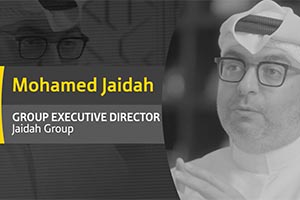
 Jaidah Group Executive Director examines shifting consumer demand and new ownership models in a Global Platform video by Oxford Business Group Doha, May 2026: Chinese automotive manufacturers have captured close to 30% of Qatar's car market in just two years, a shift that signals a deeper transformation in how the region's consumers think about mobility. A new Global Platform video by Oxford Business Group, produced in partnership with Jaidah Group, examines what is driving this change and what it means for the future of Qatar's automotive sector. The video, titled Qatar's Evolving Auto and Mobility Sector, features Mohamed Jaidah, who highlights how the country's long-term planning in the lead-up to the 2022 FIFA World Cup has laid the groundwork for sustained economic transformation. Significant investments in transport and logistics infrastructure - including road networks, rail systems, ports and the award-winning Hamad International Airport - have strengthened Qatar's position as a regional and international hub. The discussion points to Qatar's strategic geographic location, offering access to a broad population base across Central Asia, East Africa and Europe, alongside competitive energy costs that enhance its attractiveness as a business destination. These structural advantages are supporting renewed momentum in the automotive market, which is rebounding following a period of volatility. At the same time, changing consumer behaviour is influencing demand patterns, with vehicles increasingly viewed as practical mobility solutions rather than status symbols. This shift is reflected in the growing presence of Asian manufacturers, particularly Chinese brands, which have rapidly expanded their market share in recent years. Looking ahead, Mohamed Jaidah said the coming decade would be defined by continued transformation, underpinned by both public- and private-sector alignment. 'Qatar has undergone a profound transformation over the past decade, and the next phase will be just as significant. With the infrastructure now in place and a clear long-term vision, the country is well positioned to strengthen its role as a regional and international hub for mobility and trade,' he noted. The video also examines evolving ownership models across both business-to-business and business-to-consumer segments. Companies are increasingly favouring leasing and rental solutions over asset ownership, while individual consumers are prioritising flexibility and ease of use. Marc-André De Blois, Director of Video Content at OBG, said the findings point to a structural shift in how mobility is consumed and delivered in Qatar. 'What we are seeing in Qatar is not simply a recovery in the automotive market, but a redefinition of mobility itself. Changing consumer expectations, the rise of new market entrants and the shift towards service-based models are collectively reshaping the sector, creating new opportunities for operators while requiring a more adaptive regulatory framework,' he said. The video forms part of Oxford Business Group's Global Platform, which features interviews and analysis on key sectors across emerging and frontier markets. It provides insight into how Qatar is positioning itself for the next phase of growth, with mobility set to remain a central component of its economic development strategy.
| 

 RSS Feed


